Introducing Engine, our new model product
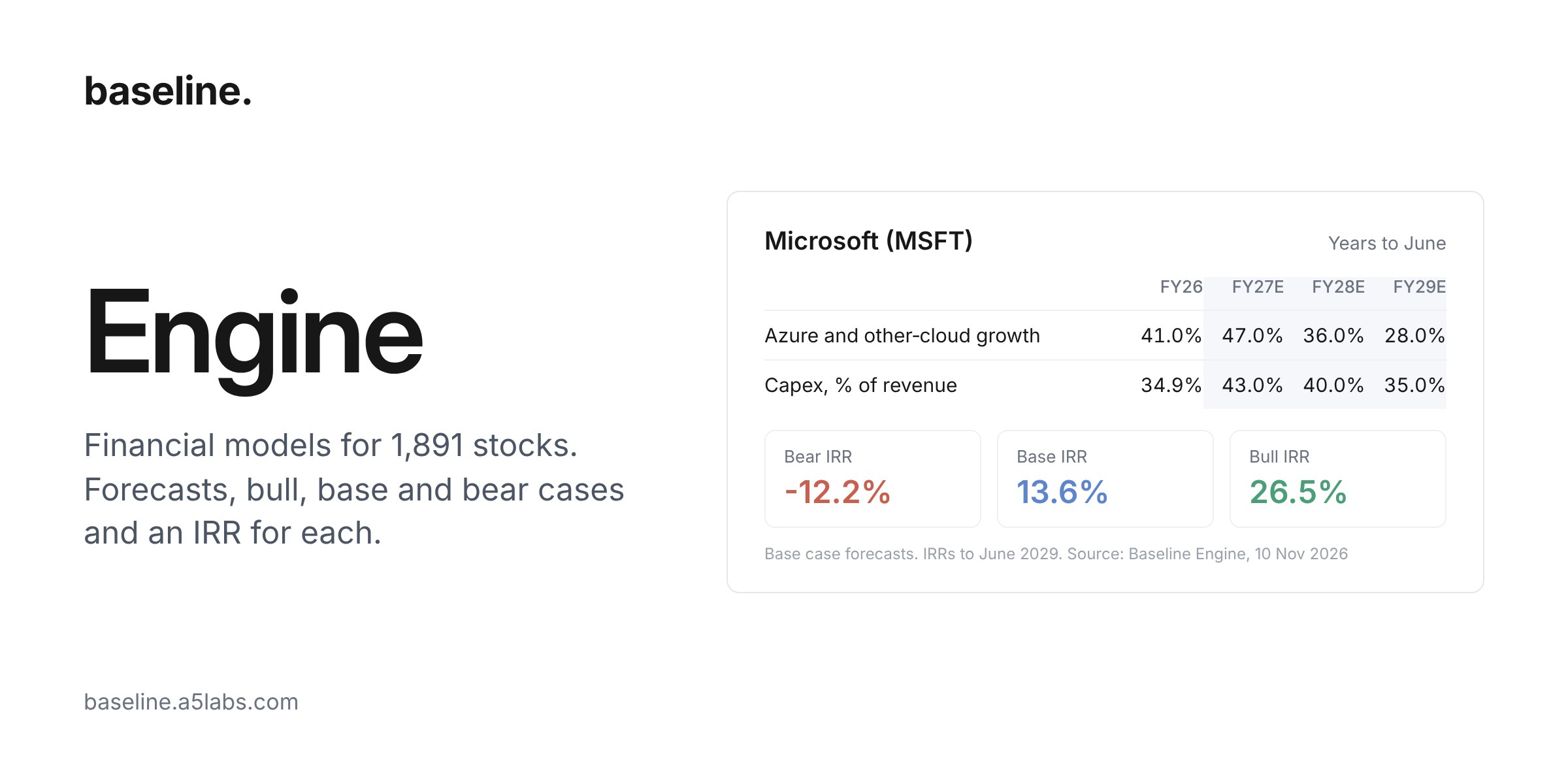
Access financial models, forecasts and valuation scenarios on ~1,900 stocks
Until now we have kept valuation out of Baseline. The scores tell you how good a business is, not whether the shares are good value. An expensive, high quality company can de-rate, and vice versa. This week we are launching valuation on Baseline, through our new Engine product and two new valuation columns alongside the scores.
Engine: financial models for ~1,900 stocks
We have built financial models for 1,891 stocks, with more being added daily. Each one has the key drivers, a revenue build, P&L, cash flow and balance sheet, five years of history and five years of forecasts, then a bull, base and bear case with an IRR for each.
The forecasts are built on everything Baseline already has on the company (filings, earnings calls, peers, our scores and rationales) plus S&P market data, and they are rerun every quarter when results come out. Every forecast input has a note explaining the number, and the assumptions are editable.
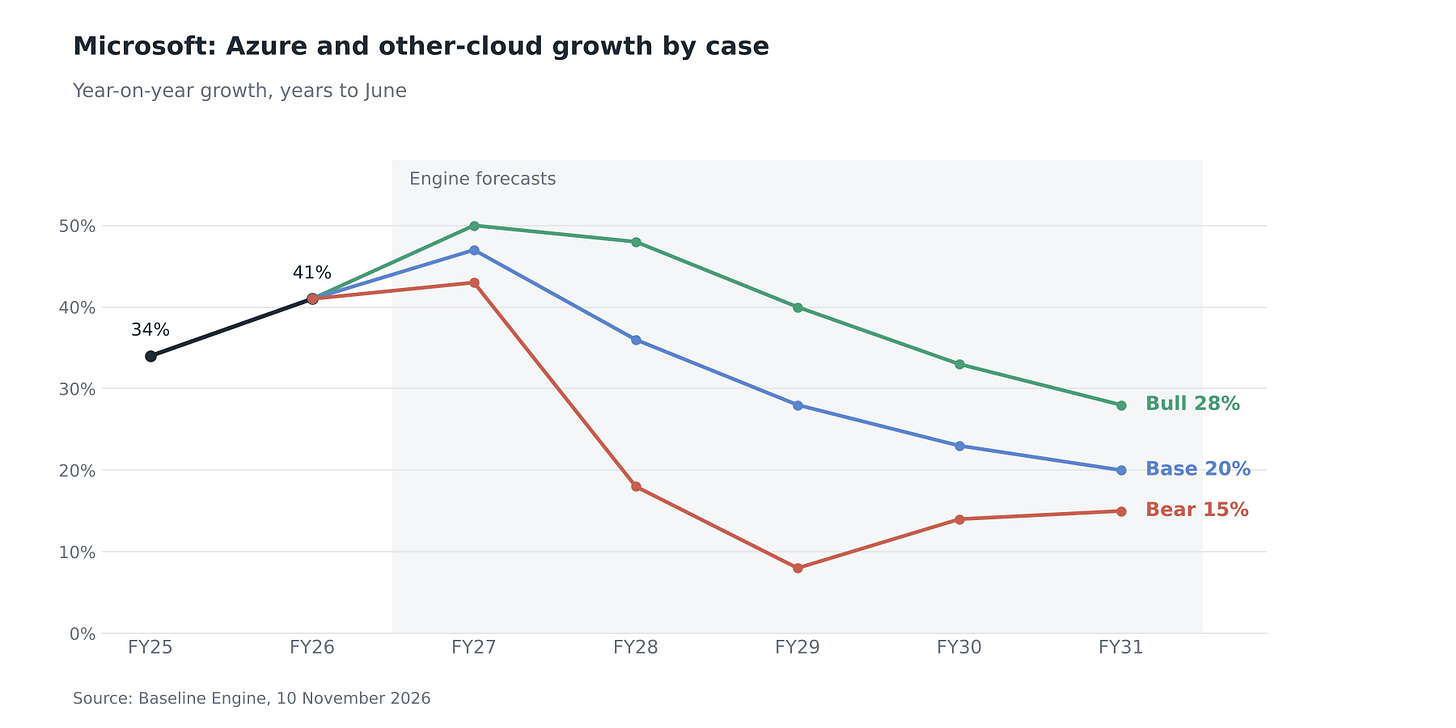
On Microsoft, all three cases have Azure growing faster next year than last, because the contract book and new capacity are already in place. After that it comes down to whether customers use the capacity. The bear case has a funding and consumption slowdown that takes growth down to 8% in FY29, while the bull case still has it at 40%.
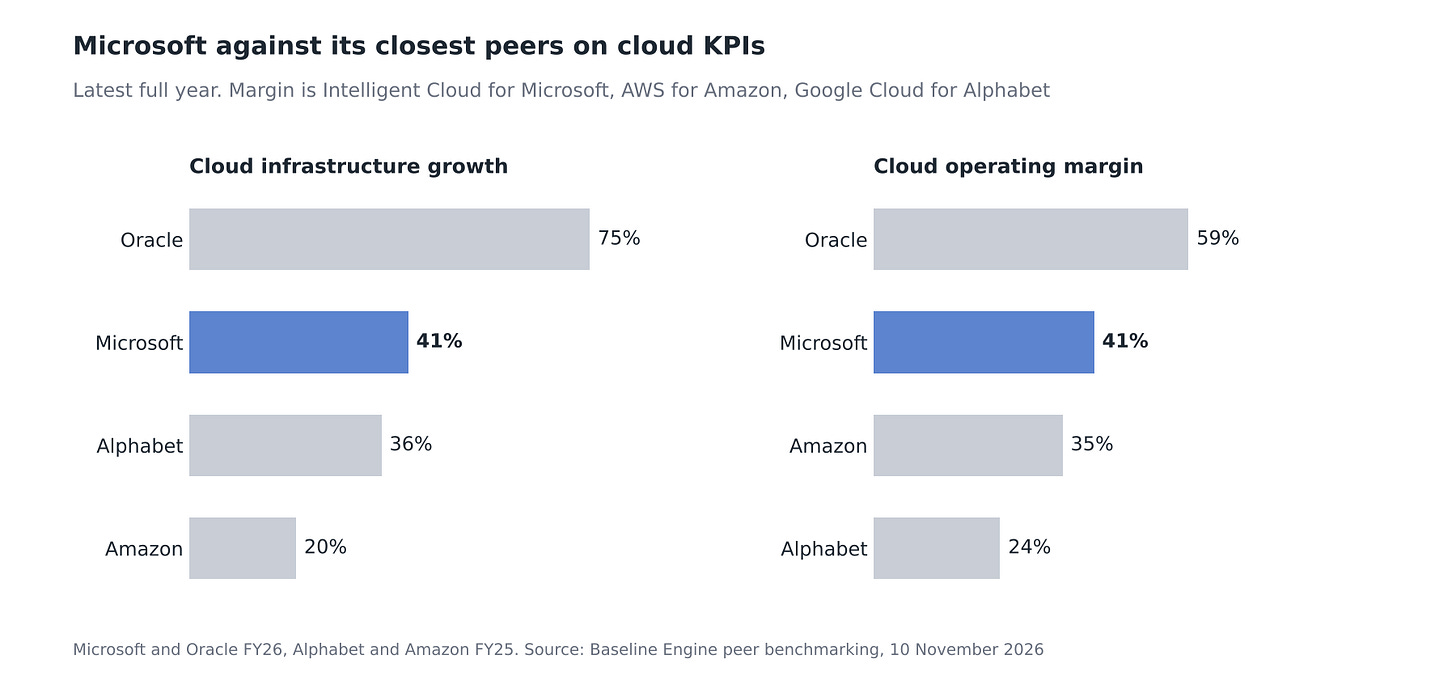
We also benchmark each company against its peers on its own KPIs, not just on growth and margins. For Microsoft that means cloud growth, backlog growth, cloud margin and paid AI seats against AWS, Google Cloud and Oracle. Microsoft is growing its cloud business faster than AWS and Google Cloud and at a higher margin. Oracle is ahead on both, although it is spending 83% of revenue on capex to get there. On paid AI seats Microsoft has 30 million Copilot seats against 8 million Gemini Enterprise seats at Google.
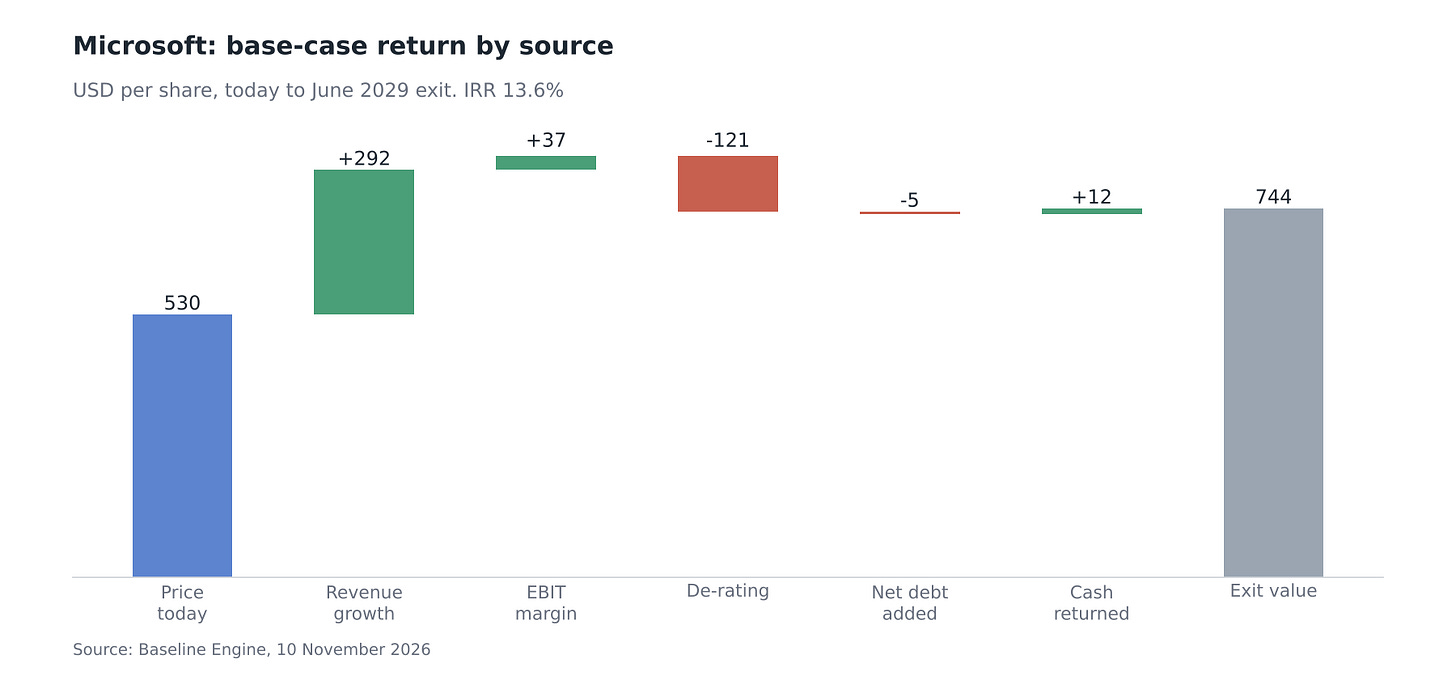
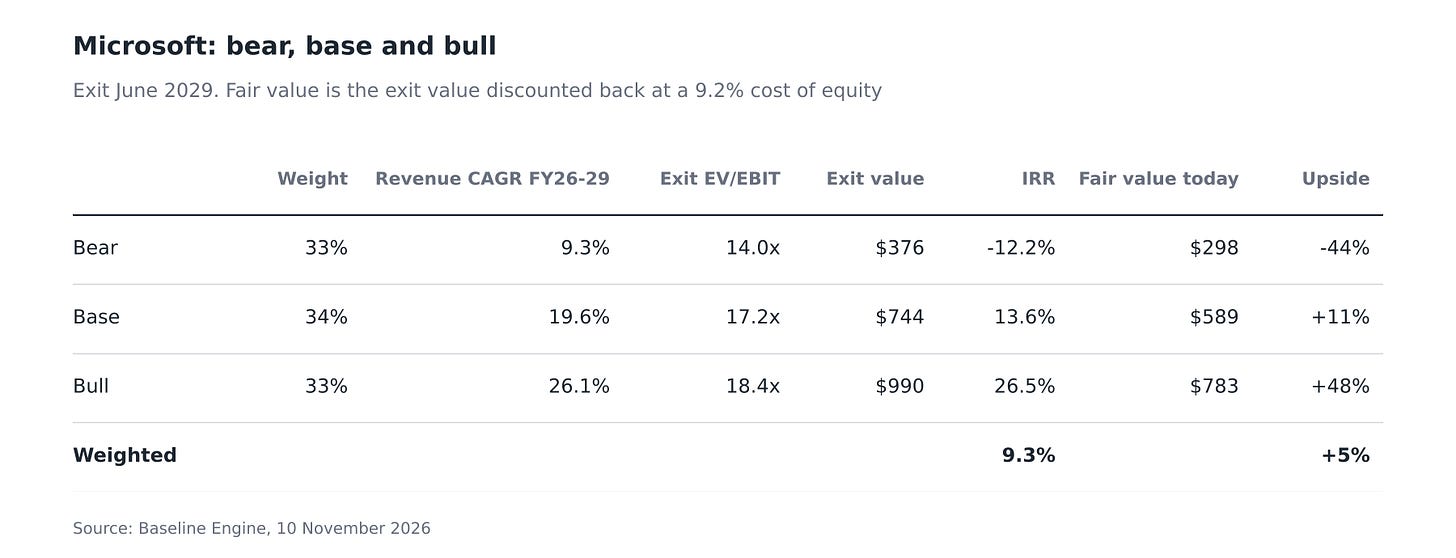
Engine then splits out where the return comes from. In the Microsoft base case the shares go from $530 today to an exit value of $744 in June 2029. Revenue growth adds $292 a share and margin $37, but the case also assumes the multiple comes down from 20x to 17x EV/EBIT, which takes $121 off. That works out at a 13.6% IRR.
The bear case gives -12.2% and the bull case 26.5%. Weighted across the three, that is 9.3% a year against a 9.2% cost of equity. You can change the weights or the cost of equity and see what it does to the return.
Valuation columns
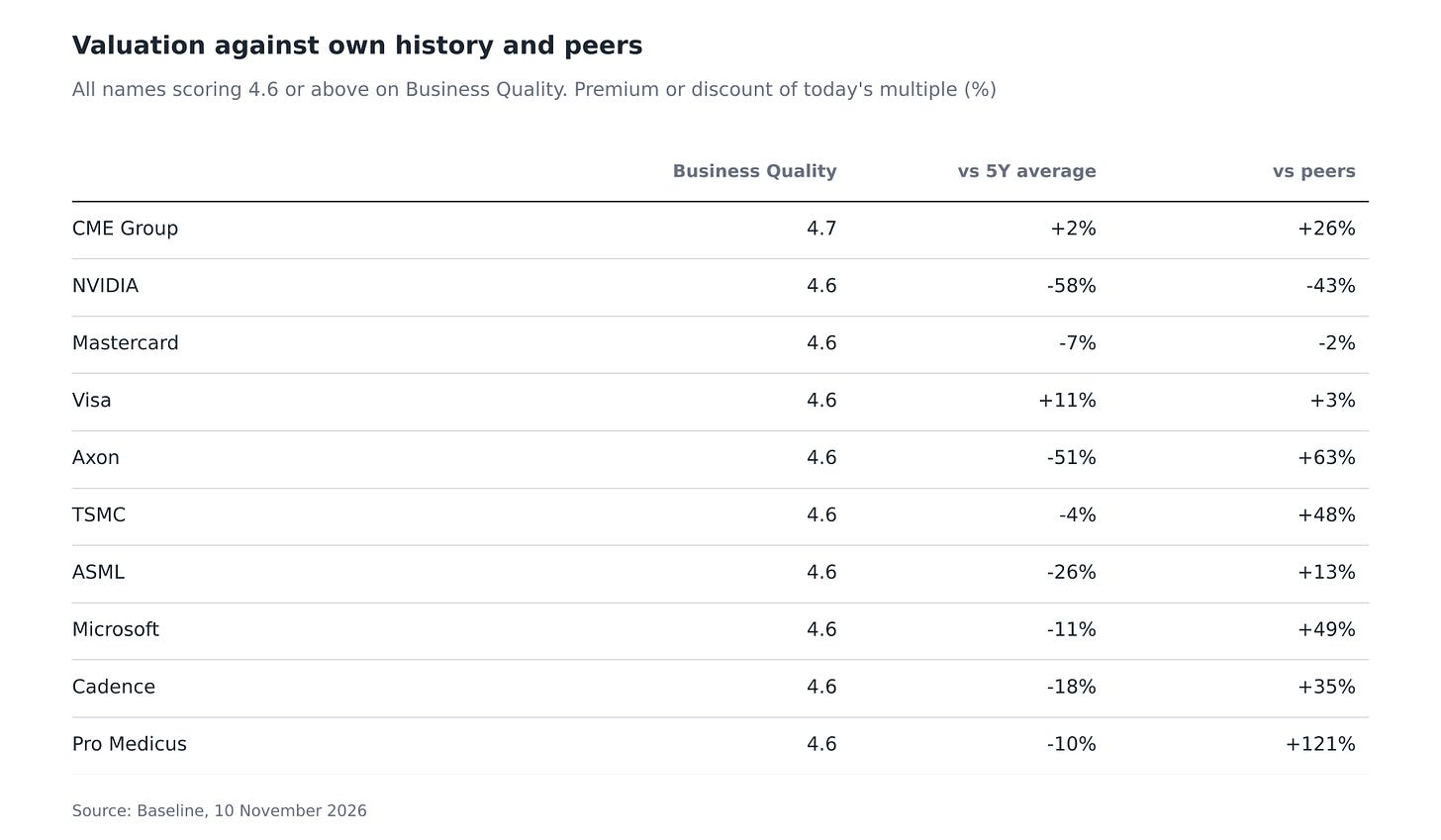
Subscribers now have two new columns next to the scores, Valuation vs 5Y Avg. and Valuation vs Peers. They show how a stock’s multiple compares with its own five-year average and with its peer group, so you can look for high quality businesses trading below where they usually do. Of the ten names scoring 4.6 or more on Business Quality, NVIDIA and Axon both trade at less than half their five-year average multiple, although Axon still trades at a big premium to its peers.
None of this is investment advice. Engine is a model with its assumptions set out so you can check them, not a recommendation to buy or sell anything.
How to get it
Engine is part of the $39 a month plan, so if you already subscribe there is nothing extra to pay and it is on your account now. If you don’t, use code ENGINE to get your first month for $10.